
COVID BROOCHES
In 2020–2021, as the world adjusted to lockdowns and social distancing, Stuart Freeman turned inward and produced a series of jeweled brooches that reflect both the isolation of the period and a quiet resilience. Working from a compact home studio, Freeman combined traditional metalsmithing techniques with found materials and salvaged gemstones to create pieces that are intimate, tactile, and rich with narrative detail.
Materials and Technique
Metals: Sterling silver and recycled brass were the primary metals, chosen for their durability and the warmth of their tones when paired with colored stones. Subtle surface treatments—oxidation, hand-hammering, and soft patination—gave each brooch a lived-in, timeworn character.
Gemstones and embellishments: Freeman used a mix of small cabochons, faceted semi-precious stones, glass beads, and repurposed costume-jewelry elements. Sapphire fragments, garnet chips, and recycled rhinestones introduced flashes of color; mother-of-pearl and shell inlays added an organic sheen.
Construction: Pieces ranged from compact, minimally composed forms to more layered, collage-like brooches. Settings were often bezel-set or tube-set by hand; some designs incorporated soldered filigree and miniature rivets. Backings and pins were custom-fitted to ensure secure wearability.
Design Themes and Aesthetic
Contraction and concealment: Many brooches feature enclosed settings and recessed stones, suggesting containment—mirroring the interior focus of pandemic life.
Repair and reclamation: Visible joins, patched-in elements, and the use of salvaged materials evoke mending and reuse, a response to global shortages and a cultural shift toward sustainability.
Micro-narratives: Each brooch reads like a small story. A cluster of mismatched stones can suggest a confetti of private celebrations postponed or adapted; a single dark stone set off-center may hint at solitude or a focal moment of reflection.
Quiet luxury: The work avoids overt showiness; instead it favors nuanced texture, restrained palettes, and the kind of detail that rewards close inspection.
Notable Pieces
"Quarantine Keepsake": A compact sterling brooch with a recessed oval of dark blue glass, bordered by a ring of tiny brass rivets and a thin patinated silver halo. Its hand-hammered surface catches light in a way that reveals fingerprints and tool marks—evidence of the maker’s hand.
"Letter from April": An asymmetric assemblage combining mother-of-pearl slivers, a small faceted garnet, and a strip of repurposed metal stamped with minute lines. The piece feels like a folded note, intimate and personal.
"Window Days": A layered brooch with a small central cabochon set against a backdrop of textured brass, pierced to create tiny apertures. The pierced pattern resembles a grid or window, a recurring motif in Freeman’s pandemic work.
Context and Reception Freeman’s brooches circulated primarily through small virtual exhibitions, social-media showcases, and limited private commissions. Collectors and peers noted the emotional clarity of the pieces: they were wearable artifacts of a specific moment in time. Critics highlighted the contrast between modest scale and emotional depth—how small objects could carry complex associations about care, distance, and creative adaptation.
Legacy These brooches document a period when many artists reassessed materials, methods, and purpose. Freeman’s pandemic-era work stands as a testimony to resourcefulness: making meaningful objects from what was available, embracing imperfections, and turning personal constraint into deliberate design choices. As wearable art, the brooches continue to function as personal markers—quiet talismans of an era defined by separation, resilience, and the slow, careful work of making.

Scott Brand Toilet Paper

Soup TREE pin

Santa in Mask
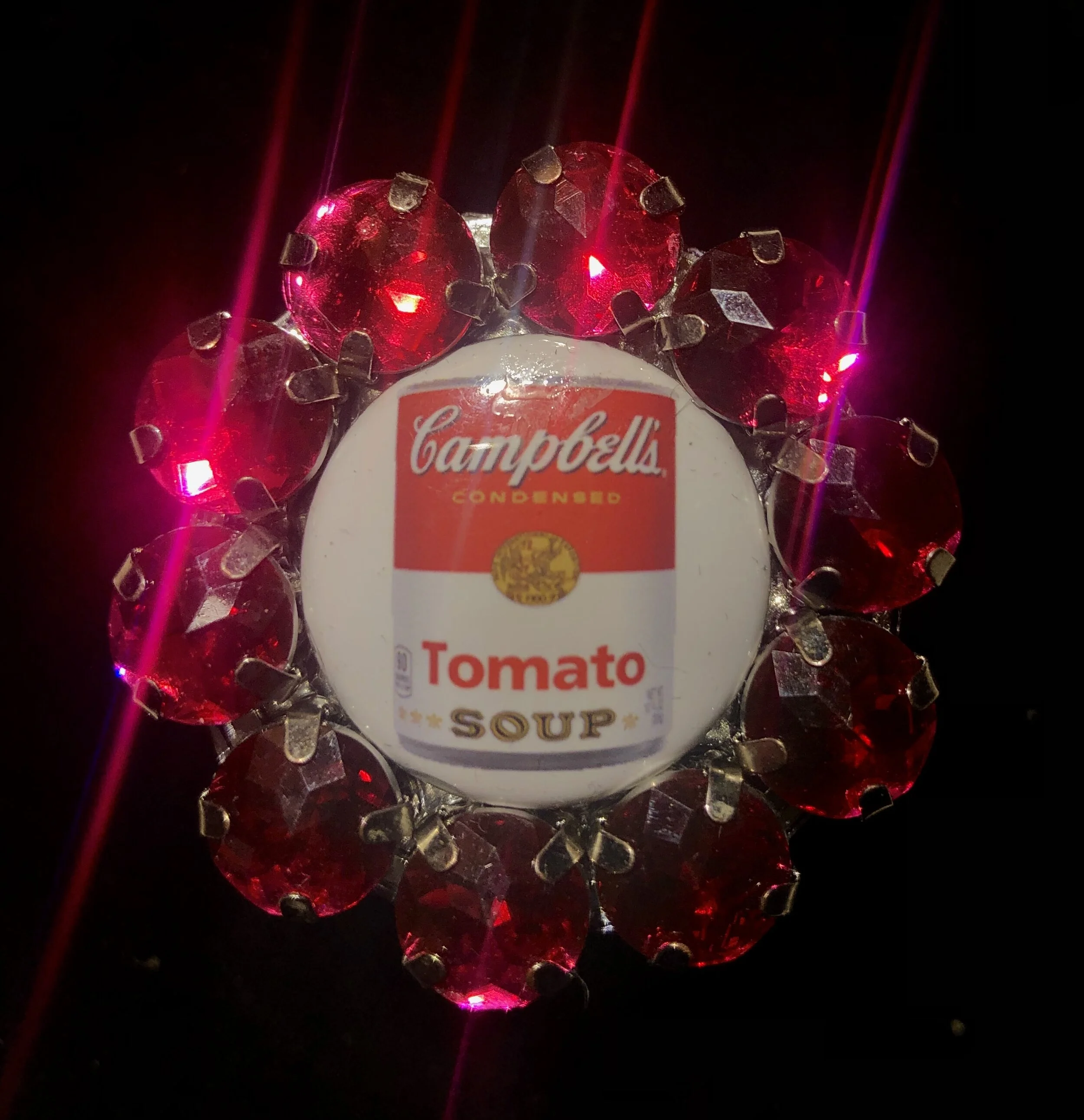
Tomato Soup

Black & White

Clorox Wipes

Scott Roll Of Paper

Covid-19 Molecular Model

I Love NY

Sylvia & Andy

Mask Tree

Roll of Paper

Purell Hand Sanitizer

Clorox Wipes Wreath

The Plain Bagel